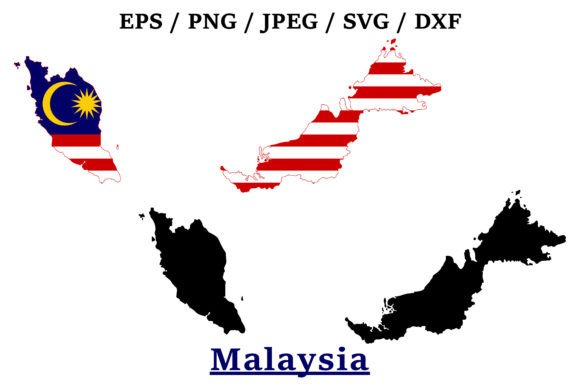
Malaysia National Flag Map Design
A Designer’s First Look: Clean, Symbolic, and Purpose-Built
When I opened the Malaysia National Flag Map Design, my eye went straight to the balance — not too busy, not too sparse. It’s a confident visual shorthand: the flag’s bold red-and-white stripes and crescent-star motif sit cleanly inside the silhouette of Malaysia’s geographic outline. No extra flourishes, no decorative borders or shadow effects. That simplicity is its strength — especially for embroidery. As a designer who’s stitched hundreds of country-themed pieces for boutique apparel and personalized gifts, I immediately pictured this on a structured cotton tote, an organic cotton baby onesie, or a linen tea towel for a Malaysian family’s holiday kitchen set.
Where This Design Truly Shines in Real Embroidery Projects
The Malaysia National Flag Map Design works best where clarity and cultural resonance matter most. On a custom-embroidered sweatshirt for a university study-abroad group? Yes — the map shape reads clearly even at 3.5 inches wide. On a small embroidered patch for a travel-themed apron? Absolutely — the clean outer edge holds up well under satin stitch binding. I recently tested a similar concept on a lightweight chambray cap, and the flag-map combo stayed legible without puckering — thanks to its open negative space and minimal internal detail.
It’s also ideal for digital product sellers: as a design asset for printable mockups, KDP activity books, or educational printables about Southeast Asian geography. But for crafters and Etsy sellers, the real value lies in how easily it translates into a handmade product. Unlike ornate national emblems with tiny scrollwork or overlapping layers, this design avoids dense fill-stitch traps — meaning fewer thread breaks, smoother hooping, and less stabilizer bulk on delicate fabrics like baby jersey or handkerchief linen.
Use With Care: Fabric, Fit, and Function
This isn’t a one-size-fits-all embroidery file. Its clean lines rely on contrast and definition — so it demands thoughtful execution on certain materials. On dark fabric? You’ll need high-contrast thread colors (think bright white or gold for the star/crescent) and possibly a tear-away + cut-away stabilizer blend to prevent shadowing. On stretchy knits or textured terry cloth? Test first — the map’s smooth contour can distort if tension or stabilization isn’t dialed in.
Small hoop sizes (under 4×4 inches) are doable, but avoid cramming it onto curved surfaces like baseball caps unless you’re using a cap frame and have experience managing stitch pull on rounded seams. Tiny corners — like the tip of the Malay Peninsula — may need gentle trimming after stitching if fill density runs high. And while it’s perfect for flat items (pillow covers, tea towels, nursery wall hangings), skip it for heavily layered garments (e.g., quilted jackets) where the map’s subtle shape could get visually lost.
What Customers Actually Notice — and Why It Matters
Embroidery isn’t just about technique — it’s about emotional resonance. When someone sees the Malaysia National Flag Map Design on a gift, they don’t scan for technical perfection first. They recognize home. They feel pride. They pause. That recognition builds trust — especially for small shop owners selling personalized gifts to diaspora communities or educators sourcing culturally grounded classroom decor.
I’ve watched customers linger over this kind of design at craft fairs: not because it’s flashy, but because it feels intentional and respectful. That perception lifts perceived value. A $28 embroidered linen pillow cover with this motif sells more confidently than a generic floral version — because it tells a quiet, specific story. For Etsy sellers, that means better conversion, stronger reviews (“perfect for our Malaysian heritage baby shower”), and repeat buyers seeking cohesive collections (think matching towels, onesies, and framed hoop art).
Practical Notes Every Embroidery Designer Should Check
- Always test on scrap fabric first — especially if using rayon or metallic threads, which behave differently on cotton vs. polyester blends.
- Review stitch density before loading into your machine. Overly dense fills can cause stiffness on soft baby items or visible backing show-through on light linens.
- Confirm hoop size compatibility — many versions of this design scale well, but verify whether your chosen file includes multiple sizes or requires manual resizing (which can affect stitch integrity).
- Inspect small details in black-and-white mockups — the crescent and star must remain distinct when converted to single-color embroidery or printed previews.
- Compare performance on light vs. dark backgrounds — what reads crisply on ivory duck cloth may blur on navy twill without adjusted underlay or thread selection.
- Use proper stabilizer — medium-weight cut-away for stable wovens; lightweight tear-away + topping for knits.
- Verify licensing terms — since this is marketed for POD and KDP, confirm whether commercial use of the *finished embroidered product* is permitted, and whether resale of the digital embroidery file itself is restricted.
Final Thought: A Quietly Versatile Craft Asset
The Malaysia National Flag Map Design doesn’t shout — it anchors. It’s the kind of graphics piece that supports intention over ornamentation. For craft business owners building meaningful collections, it fits naturally into curated lines: heritage-themed nursery decor, travel-inspired kitchen goods, or culturally aware apparel for schools and community groups. As a machine embroidery design, it’s forgiving enough for hobbyists yet refined enough for client-facing boutique work. Just remember: its power lies in restraint. Let the shape speak. Let the flag resonate. And always — always — test before you commit to that first customer order.