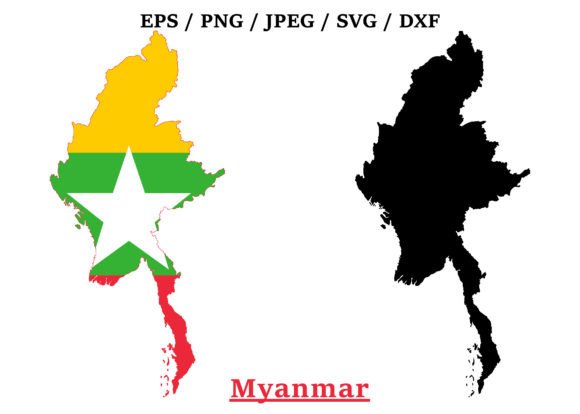
Myanmar National Flag Map Design: Graphics for Crafts
As a brand designer who’s helped over 80 local businesses refine their visual identity—from artisanal tea brands in Portland to handmade soap studios in Asheville—I recently evaluated the Myanmar National Flag Map Design for a real-world project: rebranding a family-run Burmese-inspired bakery in Chicago. The goal? To refresh their packaging, menu boards, and social media visuals while honoring cultural authenticity without veering into cliché or oversimplification.
A First Impression That Speaks Before You Do
The Myanmar National Flag Map Design lands with quiet confidence—not loud, not flashy, but unmistakably grounded. It pairs the clean geometry of Myanmar’s tricolor flag (yellow, green, red) with a softly contoured map outline of the country. There’s no heavy ornamentation, no distressed texture, no forced “hand-drawn” wobble—just balanced proportion, intentional negative space, and crisp edge definition. This makes it feel modern, respectful, and editorially sound. It leans toward elegant rather than playful, authentic rather than decorative—and that distinction matters deeply when you’re building trust with customers who value intentionality.
Where It Fits Naturally in Local Business Branding
This isn’t clipart for filler—it’s a graphic design asset with functional versatility. In our bakery project, we used it as a subtle watermark on kraft paper takeout bags, scaled down as a foil-stamped accent on cinnamon roll boxes, and enlarged as a hero graphic behind the counter’s chalkboard menu. It also anchored our Instagram carousel posts for seasonal specials like “Golden Tea Buns”—paired with warm-toned photography and clean sans-serif typography.
Here’s where it delivers real value across small business touchpoints:
- Product labels: Works beautifully as a secondary brand element beside ingredient lists—especially on jars of house-made chili oil or rice vinegar.
- Packaging accents: Adds geographic resonance to gift boxes from home decor shops or boutique florists curating Southeast Asian-themed arrangements.
- Social media graphics: Serves as a consistent visual anchor across Reels thumbnails, story highlights, and promotional banners—reinforcing origin storytelling without needing text.
- Printable design: Ideal for thank-you cards included with online orders or as part of a digital product bundle for educators teaching geography or cultural studies.
- Product mockup: Renders cleanly on Canva templates, Shopify product pages, and Etsy listing visuals—particularly strong against neutral or earth-tone backgrounds.
Why It Strengthens Real Local Business Presentation
When done right, this kind of illustration does more than look nice—it builds credibility. Customers scanning a farmers’ market stall or scrolling past an Instagram ad make split-second judgments. A well-integrated Myanmar National Flag Map Design signals care, context, and cohesion. It supports:
- Stronger first impression: Instantly communicates heritage and authenticity—no explanation needed.
- Better product recognition: Becomes a repeatable visual cue across formats (e.g., same icon on jar label + website banner + loyalty card).
- Clearer visual hierarchy: Its balanced shape draws attention without overwhelming supporting copy or photography.
- More consistent brand identity: Functions reliably across print and digital—unlike photos or handwritten elements that vary in tone.
- Improved customer trust: Signals professionalism and cultural respect—critical for food businesses, skincare brands, or children’s product lines rooted in regional tradition.
Where to Use It Thoughtfully—And Where to Pause
This design asset shines brightest when given breathing room. It works exceptionally well on:
- Hero banners and large-format posters
- Decorative brand elements (e.g., border motifs on recipe cards or packaging liners)
- Seasonal campaign visuals (think: monsoon season promotions or festival gift sets)
- Boutique visuals—especially for curated shops selling Burmese textiles, ceramics, or teas
- Social media campaign graphics where cultural context enhances storytelling
Use it carefully—or avoid altogether—in contexts where clarity, minimalism, or legal precision is non-negotiable:
- Formal corporate branding (e.g., law firms or financial services)
- Very small labels (under 1.5 inches wide)—details may blur or lose legibility
- Crowded packaging layouts with dense ingredient lists or certifications
- Backgrounds with low contrast (e.g., light yellow on pale gold)
- Luxury minimalist brands where every element must serve extreme restraint
Practical Brand Designer Notes You’ll Actually Use
Before committing to the Myanmar National Flag Map Design in your next small business branding project, run these checks:
- Test it on real packaging mockups—not just digital previews. Does it hold up on matte kraft paper? Does foil stamping preserve its edges?
- Check black-and-white usage: Will it reproduce clearly in grayscale for invoices or internal documents?
- Preview at 30% scale on a physical label—many vector assets pixelate or lose definition when downsized.
- Test it with your full brand palette: Does it harmonize with your primary typeface? Try it beside serif, sans serif, script, and display fonts.
- Confirm commercial licensing: Verify it’s cleared for physical product sales—not just digital use—especially if you’re selling through Amazon KDP, Etsy, or wholesale channels.
- Inspect file types: Prefer SVG for scalable editing; PNG with transparency for layered web design; avoid JPEG unless absolutely necessary.
- Compare against competitor packaging: Does it differentiate—or unintentionally echo another brand’s visual language?
In the end, the Myanmar National Flag Map Design isn’t just another creative marketplace download. It’s a thoughtful, culturally resonant graphic design asset—one that earns its place in packaging design, logo design systems, and marketing visuals when treated with strategic intention. For local businesses, handmade sellers, and creative entrepreneurs building something meaningful, that kind of authenticity isn’t decorative. It’s foundational.