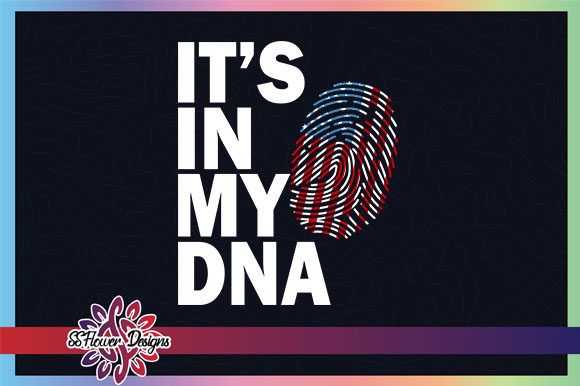
It’s in My DNA America DNA Flag
A Designer’s First Look: Clean, Patriotic, and Loaded with Personality
When I opened It’s in My DNA America DNA Flag, my first thought wasn’t “Oh, another flag design”—it was “This one *feels* intentional.” The double helix wraps organically around a stylized U.S. flag, merging science and symbolism without leaning into cliché. It’s not overly detailed, but it’s not minimal either—there’s just enough line work and structure to hold up in embroidery while leaving room for interpretation. As a designer who regularly selects graphics for real-world stitching, I immediately pictured this on a heavyweight cotton tote bag for a local boutique: clean lines, strong contrast potential, and a message that reads as heartfelt—not performative.
Where This Design Shines (and Where It Needs Care)
It’s in My DNA America DNA Flag works best when the story matters more than the spectacle. Think baby onesies for new American-born families, aprons for patriotic bakers, or embroidered patches sewn onto denim jackets at craft fairs. Its balanced proportions make it ideal for medium-to-large hoop sizes—think 4x4 inches and up—but I’d hesitate to shrink it below 3x3 without checking how the DNA strands hold up in satin stitch. Fine thread tension and tight fill stitch density can easily blur those delicate helix curves on thin or stretchy fabric like jersey or lightweight poplin.
On sweatshirts? Yes—but only with proper cutaway stabilizer underneath. The flag’s stripes benefit from consistent fill stitch coverage, and dense areas near the helix base need breathing room. On dark fabrics, high-contrast thread choices (like bright white or navy) keep the design legible; on light fabrics, deeper reds and blues add richness without muddying the motif. For holiday embroidery—say, Fourth of July kitchen towels or nursery decor—it lands warmly, not loudly. And for Etsy sellers listing handmade products, its thematic clarity helps customers instantly grasp value: it’s personal, meaningful, and visually cohesive.
Real Project Test: A Custom Embroidered Tote for a Small Shop Launch
Last week, I prepped It’s in My DNA America DNA Flag for a client launching a small shop selling locally made goods. We chose a natural canvas tote—medium weight, slightly textured—and planned to stitch it centered on the front panel. Before hooping, I ran three quick checks: first, I tested the file on scrap fabric using my Brother PR670, adjusting tension to prevent puckering on the helix loops; second, I mocked it up digitally in black and white to confirm readability at 5 inches wide; third, I reviewed thread color pairings against both light and charcoal totes. Result? Crisp, confident stitching—no skipped stitches, no thread breaks—even across the curved DNA arms. Customers responded strongly to the blend of science and sentiment, calling it “unexpected but totally fitting.” That’s the sweet spot: design intelligence meeting emotional resonance.
What Makes This More Than Just a Graphic
- Visual appeal: It avoids visual noise—no excessive gradients or tiny flourishes—so it translates cleanly from digital file to finished product.
- Stitching clarity: The open negative space between helix turns gives fill stitch room to breathe, reducing density-related issues on home machines.
- Product value: When stitched well, it elevates a basic item (a tea towel, cap, or pillow cover) into something collectible—a personalized gift with narrative weight.
- Brand consistency: Its clean geometry fits seamlessly into cohesive shop branding—especially for craft businesses focused on heritage, family, or identity-based storytelling.
- Buyer engagement: People pause longer on items that feel *authored*, not assembled. This design invites conversation—“What does ‘in my DNA’ mean to you?”—which boosts connection and trust.
Design Notes Every Embroiderer Should Keep Handy
Before stitching It’s in My DNA America DNA Flag on your next project, treat it like any serious machine embroidery design—not just a graphic:
- Test on scrap fabric *first*, especially if using textured, stretchy, or dark fabric.
- Check thread color contrast—what reads clearly on screen may vanish on navy or heather gray.
- Review stitch density in the helix core and flag stripe transitions; adjust underlay if needed for stability.
- Confirm hoop size compatibility—this isn’t a 2x2” design, and forcing it smaller risks loss of definition.
- Inspect small details at actual stitch-out scale: do the DNA rungs stay distinct? Do flag stars hold shape?
- Mock it up in grayscale to assess balance and hierarchy—does the flag or helix dominate too much?
- Use appropriate stabilizer: cutaway for knits and soft fabrics, tear-away for stable wovens like cotton duck or linen blends.
- Verify licensing terms before selling finished embroidered items or bundling the digital embroidery file—this is a Graphics asset intended for Crafts use, but commercial rights aren’t implied unless explicitly stated.
Final Thought: A Thoughtful Anchor for Meaningful Making
It’s in My DNA America DNA Flag won’t replace your go-to eagle or star motifs—but it adds dimension. It’s the kind of embroidery file that supports intentionality: whether you’re stitching a baby blanket for a military family, branding merchandise for a veteran-owned small shop, or creating a custom apron for a history teacher’s classroom, this design carries quiet confidence. It doesn’t shout. It resonates. And in a crowded field of craft business offerings—from Etsy listings to holiday markets—that kind of resonance is what turns a handmade product into a keepsake.