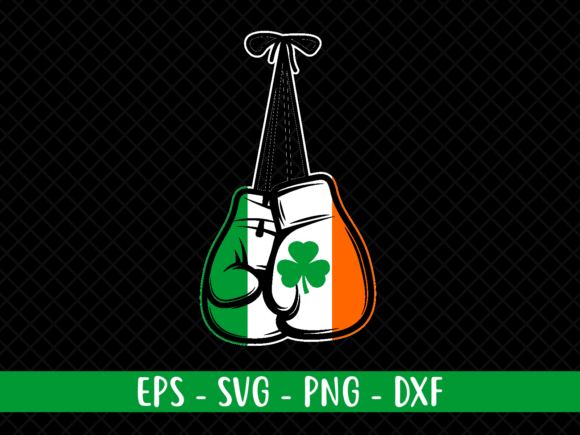
Ireland Flag Shamrock Boxing Glove
First Impressions: Bold, Playful, and Unmistakably Irish
When I opened the Ireland Flag Shamrock Irish Boxing Glove file, my first thought wasn’t “cute” or “trendy”—it was “this has presence.” The composition balances national pride with cheeky charm: a boxing glove shaped like a shamrock, wrapped in the green-white-gold tricolour. It’s not overly detailed, but it doesn’t need to be—the silhouette reads instantly, even at 3 inches tall. As an embroidery designer who’s stitched hundreds of cultural motifs, I appreciate how this avoids cliché while still feeling authentic. It leans into Irish identity without leaning on leprechauns or harps—it’s spirited, grounded, and just a little defiant. That energy makes it ideal for custom apparel meant to stand out—not blend in.
A Real-World Test: Embroidering a Limited-Edition Tote for a Dublin Pop-Up
Last month, I used the Ireland Flag Shamrock Irish Boxing Glove on a set of heavyweight cotton tote bags for a small craft fair in Dublin. We paired it with charcoal grey thread on natural canvas—no fill stitch overload, just clean satin outlines and strategic fill areas where the flag folds over the glove. Customers responded immediately: “That’s *us*,” one said, tapping the shamrock fist. Another asked if it came in a left-hand version (it doesn’t—but that’s a note for future iterations). What stood out wasn’t just recognition, but resonance. This isn’t decorative fluff. It feels earned—like a badge, not a sticker. For Etsy sellers or boutique owners, that emotional hook matters more than perfect symmetry.
Where It Shines—and Where to Pause
The Ireland Flag Shamrock Irish Boxing Glove performs especially well on medium-to-heavyweight fabrics: sweatshirt fleece, twill aprons, denim jackets, and structured pillow covers. Its moderate stitch density holds up on t-shirts when stabilized properly, and it scales beautifully from 2.5” (for baby onesies) to 4.5” (for hoodies or tote front panels). As a machine embroidery design, it avoids tiny interior details—no fragile stems, no micro-lettering—so it stitches cleanly on home and mid-range commercial machines.
That said, proceed with care on:
- Stretchy fabric—like jersey knits—unless you use cutaway + tear-away stabilizer combo and reduce top tension slightly;
- Dark garments—test contrast with olive or navy thread before committing; gold metallic can lift the flag’s yellow stripe but may snag on dense fill;
- Caps and curved surfaces—the glove’s rounded base adapts better than angular logos, but avoid placing it too low on the crown where distortion creeps in;
- Thin fabrics—like tea towels or lightweight linen—where dense satin areas might cause puckering without proper backing.
Design Integrity Meets Commercial Practicality
As a craft business owner, I judge embroidery files not just by looks—but by how they hold up across product lines. The Ireland Flag Shamrock Irish Boxing Glove delivers consistency: it reads clearly as a patch, works as an applique design with minimal trimming, and retains its personality whether stitched in monochrome or full colour. On baby embroidery? Yes—with reduced density and soft cotton thread, it reads as sweetly spirited rather than aggressive. On holiday embroidery (St. Patrick’s Day kitchen towels, for example)? It adds warmth without kitsch. And for personalized gifts—say, a groom’s apron or a boxer’s gym bag—it communicates identity without shouting.
What elevates it beyond novelty is restraint. There’s no unnecessary scrollwork, no over-rendered shadows, no gradient fills that break down in stitch. That means fewer re-hooping moments, less thread breakage, and higher confidence when quoting clients or listing on Etsy. Buyers trust handmade products that look professionally finished—and this design supports that impression, especially when paired with thoughtful thread choices and clean digitising.
Practical Notes Every Embroidery Designer Should Run Through
Before stitching your first Ireland Flag Shamrock Irish Boxing Glove, do these six things:
- Test on scrap fabric matching your final garment—especially if using textured fleece or brushed cotton;
- Check thread color contrast in both daylight and indoor lighting; what reads bold on screen may mute on dark fabric;
- Review stitch density visually—zoom in on the flag’s white stripe and glove cuff; ensure no gaps or unintended float areas;
- Confirm hoop size compatibility; if your smallest hoop is 4x4”, verify the design fits comfortably with ¼” margin;
- Inspect small details—like the curve where shamrock meets glove—does it stitch smoothly, or does it stutter at tight angles?
- Test black-and-white mockups to gauge readability for monochrome branding or minimalist shops.
Also: double-check licensing. Since this falls under Graphics and Crafts, confirm whether the file permits commercial embroidery use, resale of finished embroidered items, or inclusion in digital embroidery bundles. When in doubt, contact the seller—reputable designers clarify terms upfront.
Final Thought: A Design That Earns Its Place
The Ireland Flag Shamrock Irish Boxing Glove isn’t just another St. Patrick’s Day graphic. It’s a smart, adaptable embroidery file built for real-world making—not just preview thumbnails. It fits seamlessly into a craft business’s seasonal rotation, adds authenticity to custom apparel, and gives handmade products a distinct voice. Whether you’re stitching a single personalized gift or prepping 50 tote bags for a shop launch, this design respects your time, your machine, and your customer’s expectations. In embroidery, that balance—between spirit and structure—is rare. And worth holding onto.